


This is the fifth in a series of blog posts covering spend-based emissions calculations, exploring the best approaches for assessing carbon footprint with spend data. Check out other posts in this series covering an interview with one of the lead developers of EXIOBASE, an introduction to spend-based emissions calculations, a step-by-step guide on making spend-based calculations, and a deep dive into when to use spend- and activity-based methods.
The spend-based approach gets you from zero to insights faster than any other method in carbon accounting. It’s quick, easy to do, and offers broad coverage for hard to measure scope 3 categories. However, spend-based emissions calculations can produce misleading results when they’re applied incorrectly or for the wrong activities.
At Climatiq, we follow key global standards to make spend-based calculations as reliable as possible, ensuring you get results you can trust. If you'd rather calculate emissions from spend manually, here we'll explore common mistakes organizations make with spend-based calculations and the steps you can take to avoid them.
While the spend-based approach offers a straightforward way to estimate emissions by linking financial expenditure to carbon impact, it relies on assumptions that diverge from real-world complexity. The broad industry categories used in environmentally-extended input-output (EEIO) tables (on which spend-based emission factors are based) can’t capture the nuances of specific products and services. For example, a dollar spent on one type of electronic component can have vastly different emissions than a dollar spent on another within the same category.
EEIO models are built on regional or national data that may not reflect where a company actually operates or sources its materials. For some regions, there’s simply no data available, so broader regional averages have to be used which may skew results.
In other cases, people may be confused about, or not have enough data to know, which region is most suitable—should they choose an emission factor from the region where the product was manufactured, where it was sold, or where it originated from?
Exchange rates and inflation can also introduce errors. EEIO datasets are typically published in a single currency, but multinational companies operate in many. When you convert expenditure to match the dataset's currency, exchange rate fluctuations can skew your emissions results.
Inflation creates a similar problem. EEIO emission factors are usually published several years after the period they cover, meaning the prices in the dataset don't reflect current values. Best practice is to adjust your expenditure for inflation so it matches the emission factor's year, but this adjustment process is complex and, if done incorrectly, can introduce a greater error than it removes.
Tax and discounts add another layer of complexity that can distort spend-based emissions calculations. The core problem is that emission factors are designed to work with the actual cost of goods or services, but the figures in your financial records often include or exclude elements that have nothing to do with the physical product's carbon footprint.
Sales taxes, VAT, or import duties can inflate reported expenditure, but these additional costs don't correspond to any additional emissions—you're not buying more product, just paying the government. Discounts create the opposite problem. A supplier might offer a 20% discount, meaning you pay less for the same physical quantity of goods. If you use the discounted spend, you'll underestimate emissions because the emission factor assumes a typical price-to-emissions relationship that your discount has broken.
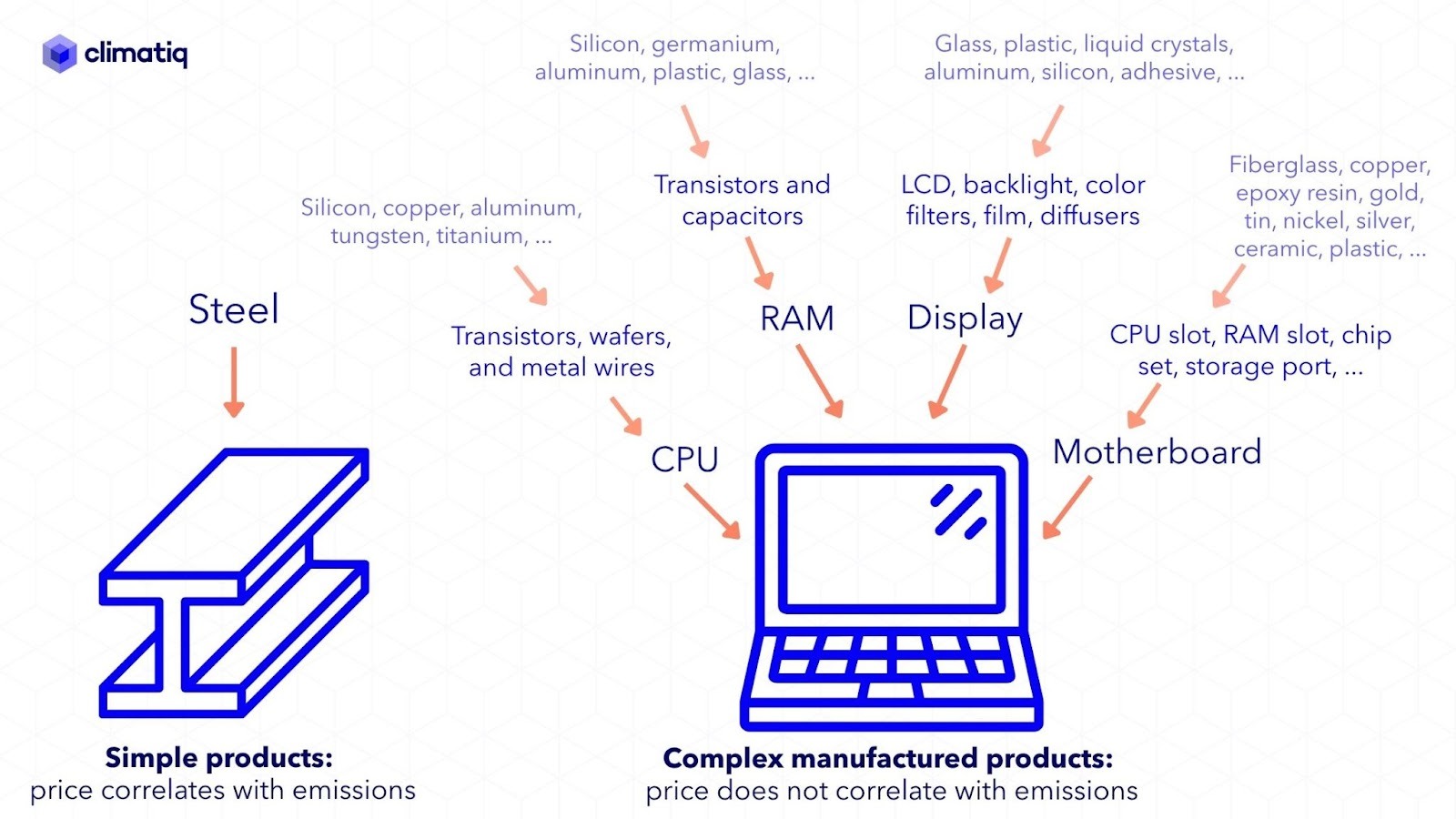
Most fundamentally, spend-based methods perform reasonably well for commodities like steel or wheat, where price correlates quite closely with physical quantity and emissions. But it breaks down for complex manufactured goods, where a premium paid for design or brand has little to do with the product's actual carbon footprint, and there are too many components to accurately assess environmental impact through spend alone. For example, a computer with significantly upgraded RAM may cost a lot more than a lower model, but would have an almost identical carbon impact.
The potential pitfalls can make the spend-based method seem daunting. But when done correctly, it offers an easily manageable way to calculate scope 3 emissions, especially for hard-to-measure categories like 3.1 (purchased goods and services) and 3.2 (capital goods). Using tools like Climatiq’s Procurement and Autopilot features, you can ensure you’re following guidance and getting the most accurate estimates possible from the spend-based method.
If you’re going to perform spend-based calculations manually, here are some tips to keep in mind:
You don’t have to go all-in for one method or another. In reality, most companies use a mix of both the spend- and activity-based methods to cover their carbon accounting needs.
After completing an initial screening of your company’s footprint using the spend-based method, you can identify which categories have the highest impact. These are the ones where you should implement the activity-based method if possible. For the rest of your scope 3 categories, it’s suitable to use the spend-based method.

EEIO datasets like EXIOBASE release new data annually, with improved accuracy as calculation methods are refined. To get the best results, you should update your emission factors each year when new data is published, which means tracking releases and manually updating your data. This is the perfect time to mention that Climatiq can handle updates for you automatically so your calculations always use the latest available data.
To follow EXIOBASE guidance properly, you need to adjust your expenditure data to match both the currency and reference year of your EEIO dataset. This means using conversion tables such as those from Eurostat to account for exchange rates and inflation before calculating emissions. While this process is essential for accuracy, it's also where many manual calculations go wrong. For a walkthrough of how to perform these adjustments, check our guide on how to make spend-based calculations.
As a final step, validate your results against primary activity data or reliable carbon footprint benchmarks. If you spot significant outliers, firstly investigate whether the calculation was performed correctly, and secondly whether spend-based is an appropriate calculation method in this context. For manufactured products, for example, where cost and emissions intensity don't always correlate, spend-based estimates are prone to error and should be treated with caution.
Despite its limitations, the spend-based method remains extremely useful for getting rapid visibility into complex supply chains. As corporations grow and their operations span more suppliers and geographies, spend-based calculations offer the most practical way to establish baseline emissions across large-scale operations. The key is knowing where the method works well and where it doesn't and supplementing with activity-based data for the categories that matter most.
In the words of Richard Wood, lead developer of EXIOBASE:
“Spend-based calculations sometimes come under fire ... They’re never likely to be able to be as precise in linking physical energy use with associated emissions as activity-based assessments, (but) spend-based approaches are generally more comprehensive, and easier to implement into existing accounting frameworks. This provides guidance into the big picture—where the problems really occur in your supply chain.”
You can read more from that interview here.


.svg)


